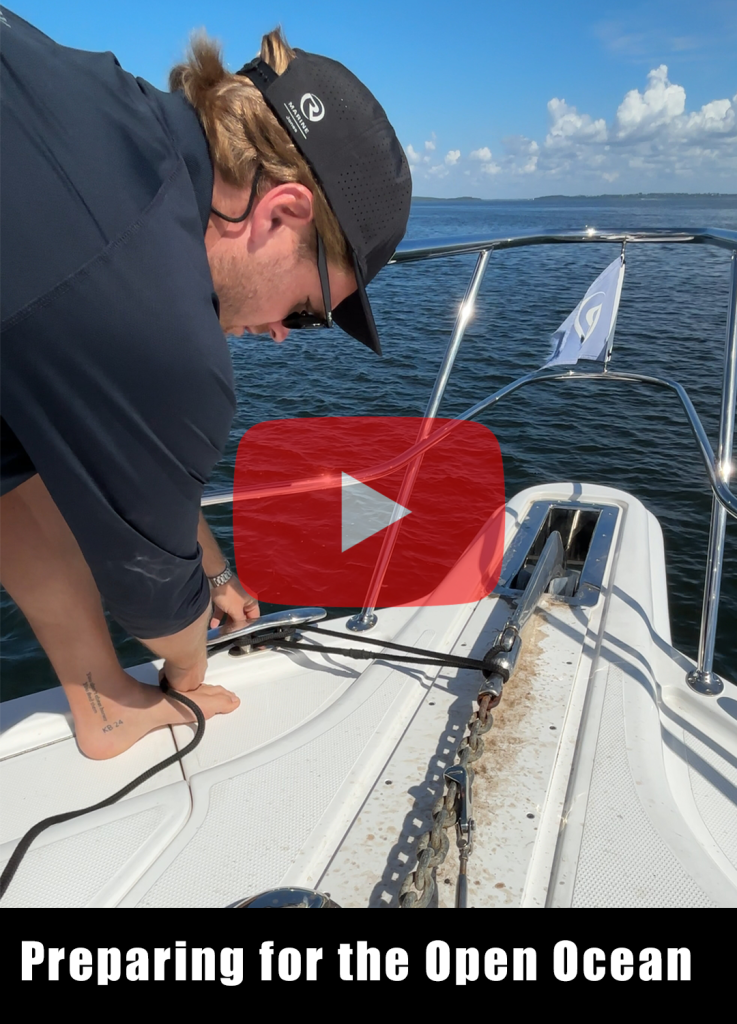
In this video, Callum shows some steps that should be followed if you plan on doing a bar crossing, or going out in the open ocean on an extended trip. It is best practice to follow these tips as it increases the level of safety and preparedness in case of an emergency.
Safety Checks: Callum emphasises the importance of inspecting all safety equipment, including life jackets, flares, and fire extinguishers, to ensure they are in optimal condition. It is also important to make sure there are enough life-jackets for every person on-board. Having an up-to-date EPIRB which is correctly registered to your vessel is also very important.
Navigation and Communication Tools: Ensuring that GPS, radar, and communication devices are functioning correctly is vital for safe navigation and staying connected while offshore. It may also be good to update your systems before heading off, and making sure you have the latest marine maps with up-to-date depth readings for coastal bars.
Provisioning and Storage: Thoughtful planning of provisions and efficient storage solutions are important, highlighting the need for adequate food, water, and essentials for the journey. Callum also prepares by stowing all unused decorations and appliances. All the lockable push-buttons on the cupboards are pushed in and locked, all the downstairs doors are securely closed and all the shower doors are locked in the closed position as well.
Securing the Anchor: Callum uses a rope to double secure the anchor, which can become dangerous if the windlass loosens and starts to drop the anchor while underway. Using both the ‘devils claw’ (which is the metal holder) and a rope tied around the chain, the anchor is much more secure and safe.
Stay up to date with out latest tips and tricks by subscribing to our YouTube channel.